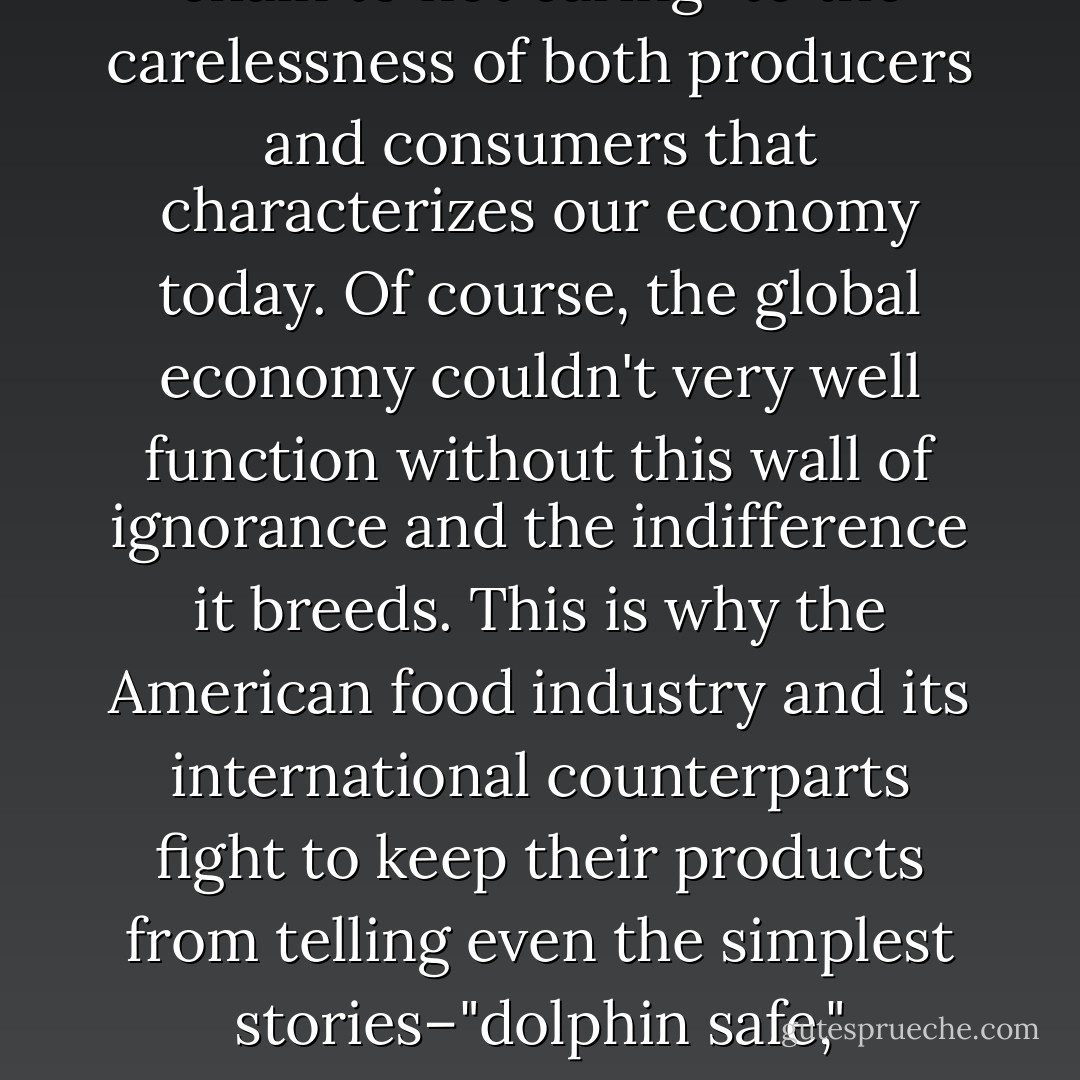
Much of our food system depends on our not knowing much about it, beyond the price disclosed by the checkout scanner; cheapness and ignorance are mutually reinforcing. And it's a short way from not knowing who's at the other end of your food chain to not caring–to the carelessness of both producers and consumers that characterizes our economy today. Of course, the global economy couldn't very well function without this wall of ignorance and the indifference it breeds. This is why the American food industry and its international counterparts fight to keep their products from telling even the simplest stories–"dolphin safe," "humanely slaughtered," etc.–about how they were produced. The more knowledge people have about the way their food is produced, the more likely it is that their values–and not just "value"–will inform their purchasing decisions.
Autor: Michael Pollan

Much of our food system depends on our not knowing much about it, beyond the price disclosed by the checkout scanner; cheapness and ignorance are mutually reinforcing. And it's a short way from not knowing who's at the other end of your food chain to not caring–to the carelessness of both producers and consumers that characterizes our economy today. Of course, the global economy couldn't very well function without this wall of ignorance and the indifference it breeds. This is why the American food industry and its international counterparts fight to keep their products from telling even the simplest stories–"dolphin safe," "humanely slaughtered," etc.–about how they were produced. The more knowledge people have about the way their food is produced, the more likely it is that their values–and not just "value"–will inform their purchasing decisions. - Michael Pollan


©gutesprueche.com

Data privacy

Imprint
Contact
Wir benutzen Cookies

Diese Website verwendet Cookies, um Ihnen die bestmögliche Funktionalität bieten zu können.

OK Ich lehne Cookies ab