The important question isn't how to keep bad physicians from harming patient; it's how to keep good physicians from harming patients. Medical malpractice suits are a remarkably ineffective remedy.
(In reference to a Harvard Medical Practice Study)... fewer than 2 percent of the patients who had received substandard care ever filed suit. Conversely, only a small minority among patients who did sue had in fact been victims of negligent care. And a patient's likelihood of winning a suit depended primarily on how poor his or her outcome was, regardless of whether that outcome was caused by disease or unavoidable risks of care. The deeper problem with medical malpractice is that by demonizing errors they prevent doctors from acknowledging

Author: Atul Gawande
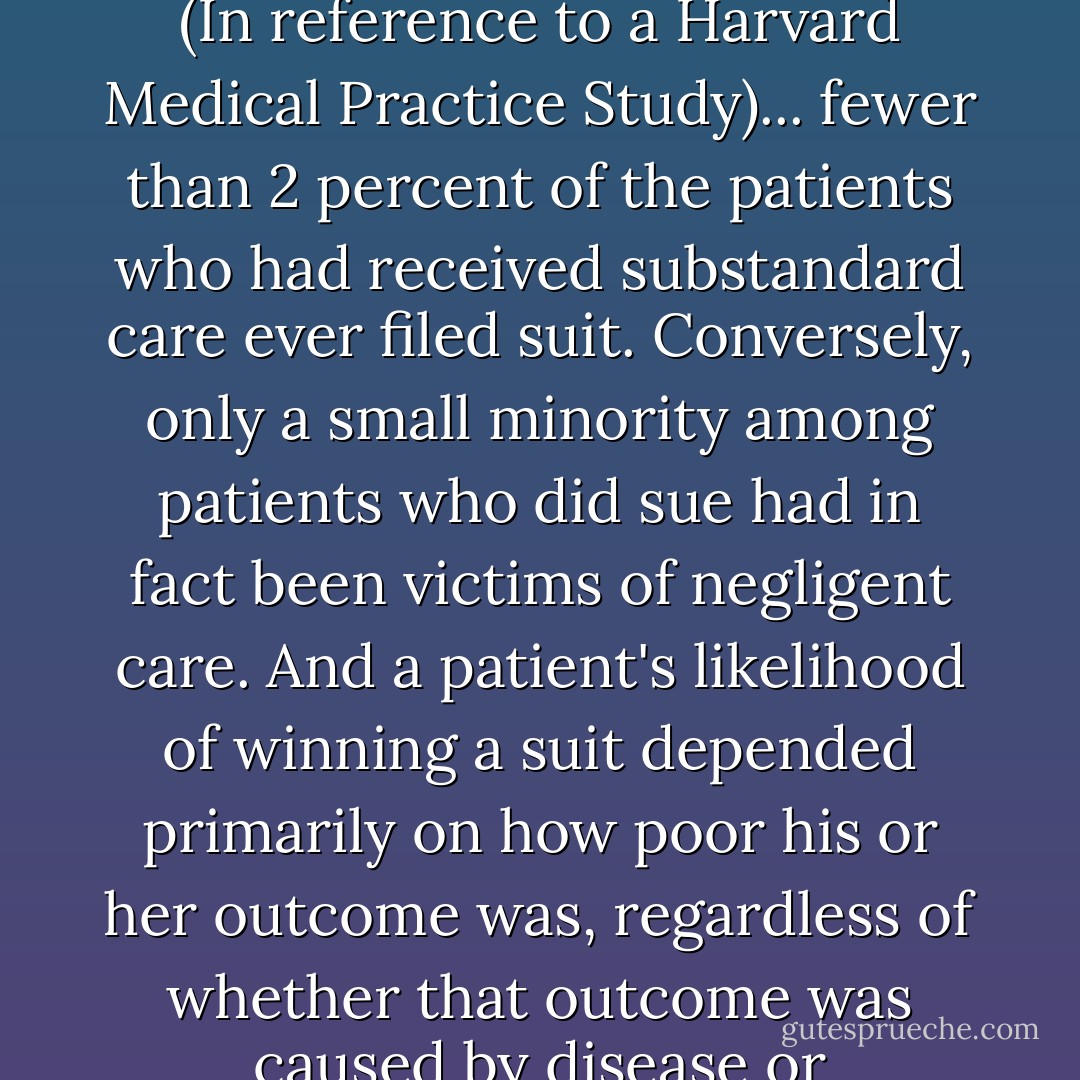
The important question isn't how to keep bad physicians from harming patient; it's how to keep good physicians from harming patients. Medical malpractice suits are a remarkably ineffective remedy.<br />(In reference to a Harvard Medical Practice Study)... fewer than 2 percent of the patients who had received substandard care ever filed suit. Conversely, only a small minority among patients who did sue had in fact been victims of negligent care. And a patient's likelihood of winning a suit depended primarily on how poor his or her outcome was, regardless of whether that outcome was caused by disease or unavoidable risks of care. The deeper problem with medical malpractice is that by demonizing errors they prevent doctors from acknowledging  - Atul Gawande


©gutesprueche.com

Data privacy

Imprint
Contact
Wir benutzen Cookies

Diese Website verwendet Cookies, um Ihnen die bestmögliche Funktionalität bieten zu können.

OK Ich lehne Cookies ab